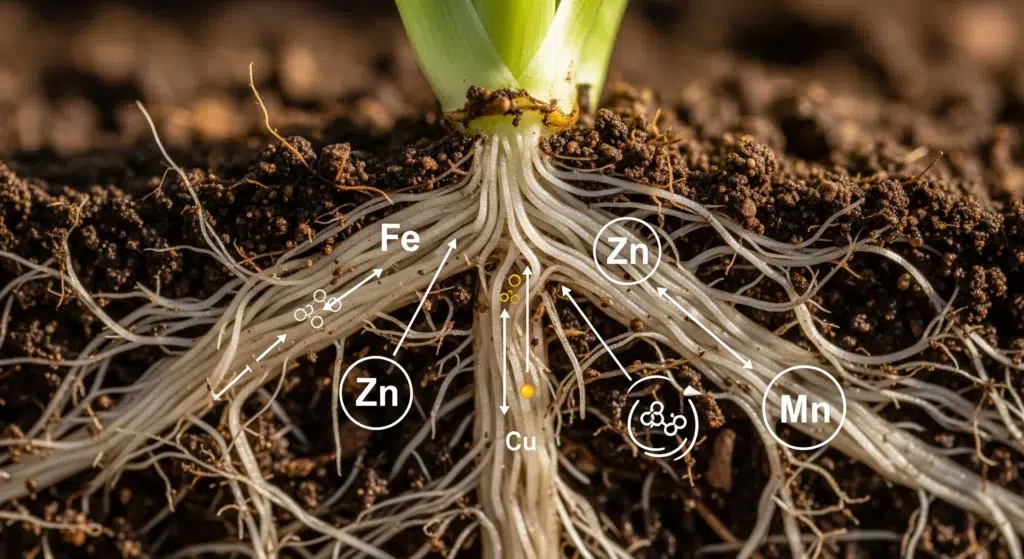
Chelated minerals are minerals bound to organic molecules so plants can absorb them efficiently. Without chelation, essential trace elements lock out in the growing medium and never reach the root.
What chelated minerals are
Chelated minerals are trace elements bound to organic molecules, typically amino acids or proteins. This binding keeps them soluble and plant-available even when pH fluctuates.
Without chelation, minerals like iron, zinc, and copper precipitate out of solution or bond to other compounds in the medium. They become unavailable. The plant shows deficiency symptoms even though the minerals are technically present.
How chelation improves growth
Better nutrient uptake
Chelated minerals dissolve more readily in water. Plant roots absorb them faster and more completely than non-chelated forms. This means less waste and more efficient feeding.
Stronger roots
Root development depends on consistent access to trace minerals. Chelation ensures availability during early growth when the root system is establishing itself.
Faster growth
When trace minerals are consistently available, internal processes run more efficiently. Photosynthesis, enzyme activity, and metabolism all improve.
In hydroponic systems, nutrients exist only in liquid form. pH shifts can quickly make non-chelated minerals unavailable. Chelated forms stay soluble and accessible regardless of pH fluctuations, producing more consistent results.
The key chelated minerals
How Berkana uses chelation
Berkana includes these trace minerals in chelated form. They are pre-balanced in a single dry formula, available from seedling to harvest without additional supplements.
When minerals are chelated, the plant gets what it needs without the grower needing to correct for lockout, precipitation, or pH-driven deficiency. The formula does that work.
Chelated minerals reduce guesswork. The plant receives consistent nutrition. The grower spends less time troubleshooting and more time observing growth.